
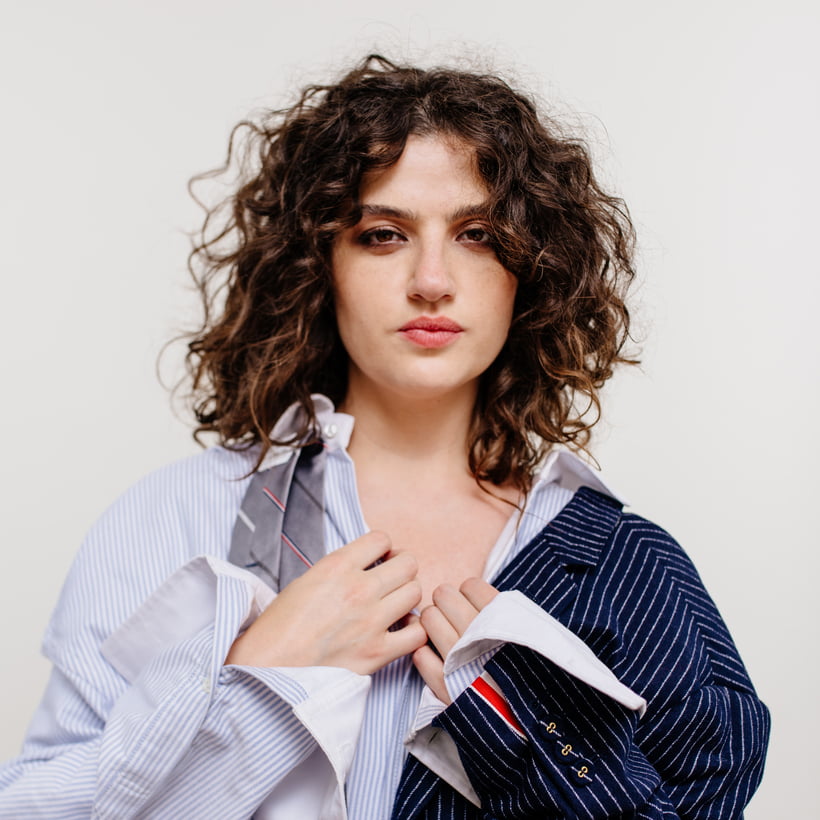
Emma Seligman: Comprehensive Profile of the Visionary Filmmaker
Emma Seligman is a Canadian film director and screenwriter who has rapidly emerged as one of the most distinctive voices in contemporary independent cinema. Born on May 3, 1995, in Toronto, Ontario, Canada, Seligman has garnered critical acclaim for her unique ability to blend dark comedy with deeply personal narratives exploring Jewish identity, queer experiences, and modern sexuality. As of 2025, the 30-year-old filmmaker has already made a significant impact with her two feature films – “Shiva Baby” (2020) and “Bottoms” (2023) – establishing herself as a powerful storyteller with a distinctive visual style and narrative voice.
Seligman’s work is characterized by its sharp wit, uncomfortable humor, and authentic representation of often-marginalized perspectives. Her films explore complex themes with both sensitivity and boldness, creating spaces for Jewish and queer stories that had previously been underexplored in mainstream cinema. Through her collaborations with frequent creative partner Rachel Sennott and her unwavering commitment to personal storytelling, Seligman has developed a reputation as a filmmaker who consistently challenges conventions and expectations while maintaining strong connections with both critics and audiences.
2 Early Life and Background
2.1 Family and Jewish Heritage
Emma Seligman was born into a Jewish family in Toronto, Ontario, where she was raised in a Reform Ashkenazi community. Her Jewish heritage has played a significant role in shaping both her personal identity and her artistic vision, providing rich cultural material that she would later explore in her films. Seligman has an older sister named Lindsay, with whom she shared many childhood experiences in their Jewish community.
The filmmaker’s bat mitzvah ceremony was held on Masada in Israel in 2008, followed by a filmmaker-themed party that reflected her early interest in cinema18. This early connection to both her Jewish roots and cinematic storytelling would later become central to her creative work. Seligman has described how her upbringing involved regular engagement with Jewish traditions and community events, noting that “at least twice a month there was either a holiday or a bar mitzvah or a shiva, or a wedding, or a bris,” creating a strong sense of cultural identity that would inform her filmmaking.
2.2 Early Interest in Film
Seligman developed a passion for cinema at a remarkably young age. As a child, she ran a blog called “Confessions of a Teenage Film Buff” where she shared her thoughts on movies18. Her interest in film criticism and analysis emerged even before her teenage years, when she participated in the Sprockets Toronto International Film Festival for Children, an event organized by TIFF that enlisted pre-teens to review and award jury prizes to family-friendly films.
At just 17 years old, Seligman began contributing film reviews to The Huffington Post, including a review of Harmony Korine’s “Spring Breakers” that demonstrated her developing critical voice18. She also served on the Toronto International Film Festival’s Next Wave Committee, connecting her with other young film enthusiasts and further deepening her engagement with cinema5. These early experiences in film criticism and analysis would later inform her approach to storytelling as a director, giving her a strong foundation in understanding narrative structure and visual language.
3 Education and Formative Training
Seligman attended Northern Secondary School in Toronto before pursuing higher education in film18. For her undergraduate studies, she initially considered attending the University of Southern California after sending them a short film she shot on an old camcorder that she described as “wasn’t horrible for a first try without any training”. However, she ultimately decided to enroll at New York University, starting in the liberal arts program before transferring to the Tisch School of the Arts as a sophomore.
At NYU, Seligman created several short films including “Lonewoods,” “Void,” and her senior thesis project “Shiva Baby”. Her first short was an experimental “silent music video sort of piece about porn and sexual validation,” while “Shiva Baby” emerged as a comedy-focused project inspired by her professor Yemane Demissie’s encouragement to create something in a world she understood. It was during her time at NYU that Seligman met Rachel Sennott, who would become a frequent collaborator and star of both the short and feature versions of “Shiva Baby”.
After graduating in May 2017, Seligman remained in New York and interned with the production company Animal Kingdom to maintain her F-1 student visa status. This period of her life involved balancing the practical necessities of building a career with the creative development of her projects, setting the stage for her transition from student filmmaker to professional director.
4 Career Breakthrough and Major Projects
4.1 Shiva Baby (Short and Feature Film)
The short film version of “Shiva Baby” began as Seligman’s senior thesis project at NYU and premiered at the 2018 South by Southwest Film Festival. The concept emerged from Seligman’s desire to create a story set at a shiva, which she found to be “contrasting and funny settings because someone just died, but it still feels like every other Jewish family function”. The short film received positive attention and encouragement from Sennott, who pushed Seligman to develop it into a feature3.
The feature-length version of “Shiva Baby” was accepted to the 2020 South by Southwest Film Festival, but its premiere was cancelled due to the COVID-19 pandemic1. It eventually premiered at the 2020 Toronto International Film Festival to critical acclaim1. The film stars Rachel Sennott as Danielle, a queer Jewish college student who encounters both her ex-girlfriend and sugar daddy at a shiva gathering. Seligman expanded the short by delving deeper into Danielle’s bisexuality and queerness, as well as exploring more complex adult relationships in the feature version.
“Shiva Baby” was celebrated for its claustrophobic tension and dark comedic approach, with Seligman citing inspiration from horror and thriller genres in creating the film’s distinctive atmosphere. The film earned numerous accolades, including the John Cassavetes Award at the 2022 Film Independent Spirit Awards.
4.2 Bottoms (2023)
Seligman reunited with Rachel Sennott for her second feature film, “Bottoms” (2023), a teen sex comedy about two high school lesbians who start a fight club to attract their cheerleader crushes1. Seligman had the idea for the film while still at NYU and began developing it with Sennott during their time there. The film was scored by English singer-songwriter Charli XCX and drew inspiration from high-school comedies like “Bring It On,” “Mean Girls,” and “Grease”.
To promote “Bottoms,” Seligman appeared on the cover of New York Magazine with stars Rachel Sennott and Ayo Edebiri. The film headlined the SXSW Film Festival on March 11, 2023, and received positive reviews for its unique blend of satire, violence, and sexual frankness110. While tonally different from “Shiva Baby,” “Bottoms” continued Seligman’s exploration of queer themes and complex female characters, establishing her range as a filmmaker willing to experiment with different genres and styles10.
Table: Emma Seligman’s Filmography and Key Works
| Year | Title | Role | Type | Significance |
|---|---|---|---|---|
| 2016 | Void | Director, Writer | Short Film | Seligman’s first short, exploring porn addiction and college crush |
| 2018 | Shiva Baby | Director, Writer | Short Film | Senior thesis project that premiered at SXSW 2018 |
| 2020 | Shiva Baby | Director, Writer | Feature Film | Feature debut based on her short, won John Cassavetes Award |
| 2023 | Bottoms | Director, Co-writer | Feature Film | Teen sex comedy co-written with Rachel Sennott |
4.3 Collaborative Approach and Future Projects
Seligman has described her filmmaking process as highly collaborative, particularly valuing her partnerships with cinematographers and actors. Her creative partnership with Rachel Sennott has been especially significant, with Sennott not only starring in her films but also contributing to the development of projects from their early stages. This collaborative approach extends to her work with other department heads, with Seligman noting that working with talented artists allows her to “see the movie from another perspective”.
Following the success of her first two features, Seligman has been developing a television pilot for HBO and considering future projects3. She has expressed interest in continuing to make “weird queer and Jewish stories on an increasingly larger scale,” indicating a commitment to maintaining her distinctive voice while expanding the scope of her storytelling. Despite the exhaustion she has described feeling after completing “Bottoms,” Seligman remains dedicated to creating work that explores the complexities of identity, community, and sexuality.
5 Personal Life and Identity
5.1 Gender and Sexuality
Emma Seligman uses both “she/her” and “they/them” pronouns and has been open about her evolving understanding of her own identity. She formerly identified as bisexual but as of 2023 considers herself “just gay”. Seligman has also discussed existing somewhere on the gender spectrum, though she does not identify as trans or nonbinary. These aspects of her identity have significantly influenced her filmmaking, with her work often exploring themes of sexual fluidity and queer experience.
Seligman has spoken about the challenges of explaining gender fluidity to family members, even those who consider themselves progressive, noting that “they don’t understand the idea of being nonbinary”. This personal experience with navigating identity within a community that simultaneously prides itself on liberalism while sometimes struggling with more nuanced understandings of gender and sexuality has informed the authentic portrayal of these dynamics in her films, particularly in “Shiva Baby”.
5.2 Religious and Political Views
Seligman’s relationship with Judaism is complex and multifaceted, encompassing both cultural connection and religious exploration. She has described how her family “never talked about God growing up,” with her association with Judaism being more about “community and tradition”. However, as an adult, she has become more interested in the religious aspects of Judaism, sometimes to the bewilderment of her family.
Politically, Seligman has expressed support for Palestinians in the face of Israeli occupation and has been critical of the Zionist expectations within Jewish institutions. She has described her Jewish upbringing as “extremely Zionist” and has spoken about working to reconcile this with her current political beliefs, seeking out other Jews who have questioned their upbringing in terms of political thought. This process of examining and redefining her relationship with her cultural and religious heritage continues to inform her artistic perspective and storytelling choices.
6 Directorial Style and Themes
6.1 Narrative Approach and Influences
Emma Seligman’s directorial style is characterized by its blend of comedy and tension, often creating uncomfortably funny situations that reveal deeper truths about her characters and their relationships110. Her work demonstrates inspiration from both horror and thriller genres, particularly in her use of claustrophobic settings and building suspense1. This approach is especially evident in “Shiva Baby,” which unfolds in nearly real time during a shiva reception, creating intense psychological pressure on its protagonist.
Seligman has cited various influences on her work, including directors who successfully transition between genres like Denis Villeneuve and the Coen brothers7. Her favorite Jewish movies include “Yentl,” “Keeping the Faith,” “Fiddler on the Roof,” “Kissing Jessica Stein,” “Crossing Delancey,” and “A Serious Man”. She has acknowledged the importance of these films in laying the groundwork for her own Jewish film journey, noting that she doesn’t know how “Shiva Baby” would have come about without them.
6.2 Recurring Themes
Several key themes recur throughout Seligman’s work, including:
Jewish Identity: Seligman’s films explore modern Jewish experience with authenticity and specificity, avoiding stereotypes while presenting nuanced portrayals of Jewish communities and traditions.
Female Sexuality: Her work often focuses on women’s relationships to sex, exploring how young women “process what sex means, what it can do for them, what they’re supposed to do for it” in a complex modern landscape.
Queer Experience: Both “Shiva Baby” and “Bottoms” center queer characters and relationships, presenting them with authenticity and without tokenism.
Social Anxiety: Seligman excels at capturing the discomfort and tension of social situations, particularly in “Shiva Baby,” which essentially functions as a feature-length anxiety attack set at a Jewish mourning ritual.
These thematic concerns reflect Seligman’s personal experiences and observations, creating work that feels both deeply personal and universally relatable in its exploration of identity, community, and self-discovery.
7 Awards and Critical Recognition
Throughout her relatively brief career, Emma Seligman has received significant critical recognition and numerous awards for her work. Her debut feature “Shiva Baby” was particularly celebrated, earning her nominations and wins from various prestigious organizations14.
Table: Selected Awards and Nominations for Emma Seligman
| Year | Award | Category | Work | Result |
|---|---|---|---|---|
| 2018 | SXSW Film Festival | Grand Jury Award, Narrative Short | Shiva Baby (short) | Nominated |
| 2020 | Outfest | Grand Jury Award, Screenwriting | Shiva Baby | Won |
| 2021 | Gotham Awards | Bingham Ray Breakthrough Director | Shiva Baby | Nominated |
| 2022 | Film Independent Spirit Awards | John Cassavetes Award | Shiva Baby | Won |
| 2022 | Directors Guild of America | Outstanding Directorial Achievement, First-Time Feature | Shiva Baby | Nominated |
| 2024 | Film Independent Spirit Awards | Best Screenplay | Bottoms | Nominated |
In addition to these honors, Seligman was named one of Filmmaker Magazine’s “25 New Faces of Indie Film” in 2020 and was included in Variety’s “10 Screenwriters to Watch” list the same year15. These accolades recognize not only her technical skill as a filmmaker but also her unique voice and perspective, which have brought fresh energy to independent cinema.
8 Interesting Facts and Trivia
Barbra Streisand has seen “Shiva Baby” and spoke with Seligman about it, though their scheduled call was “rescheduled 40 times” according to Seligman.
Seligman has considered becoming a rabbi if she ever switched careers, citing her interest in diving fully into her interest in Judaism.
Her bat mitzvah party featured filmmaker-themed favors: “They were an old plastic popcorn container from when you would go to the movies in the olden days. Each person got a different postcard for an old movie”.
Seligman is a vegetarian, which she describes as being “kosher in all but name”.
She briefly moved to Los Angeles in 2021 but resides in Bushwick, Brooklyn as of 2023.
The television show “Transparent” was one of the first times she felt authentic Jewish representation onscreen.
Seligman has described her sister Lindsay as her “favorite person to get fucked up with at bat mitzvahs”.
She interned at various production studios and served on the Toronto International Film Festival’s select youth committee, where she helped program films for the festival.
9 Frequently Asked Questions
9.1 What is Emma Seligman’s background?
Emma Seligman is a Canadian filmmaker born on May 3, 1995, in Toronto, Ontario, to a Jewish family. She was raised in a Reform Ashkenazi community in Toronto and attended Northern Secondary School before studying film at New York University’s Tisch School of the Arts18.
9.2 How did Emma Seligman start her career?
Seligman began her career making short films while at NYU, including “Void” and “Shiva Baby,” which was her senior thesis project. The short film version of “Shiva Baby” premiered at the 2018 SXSW Film Festival, and she later developed it into a feature film that launched her professional career.
9.3 What pronouns does Emma Seligman use?
Emma Seligman uses both “she/her” and “they/them” pronouns.
9.4 What is Emma Seligman’s connection to Rachel Sennott?
Seligman met Rachel Sennott during her time at NYU, and Sennott starred in both the short and feature versions of “Shiva Baby.” The two have collaborated closely, with Sennott also co-writing “Bottoms” with Seligman.
9.5 What are Emma Seligman’s future projects?
Seligman has mentioned developing a television pilot for HBO and has expressed interest in continuing to make “weird queer and Jewish stories on an increasingly larger scale”.
9.6 What awards has Emma Seligman won?
Seligman won the John Cassavetes Award at the 2022 Film Independent Spirit Awards for “Shiva Baby” and has received numerous other nominations and honors, including a Directors Guild of America nomination for Outstanding Directorial Achievement in a First-Time Feature Film.
This comprehensive profile illustrates Emma Seligman’s significant impact on contemporary cinema in a relatively short time. Through her authentic storytelling, distinctive voice, and commitment to exploring Jewish and queer experiences with both humor and depth, she has established herself as a vital voice in independent filmmaking with a promising future ahead.
References
https://www.jewcy.com/jewish-arts-and-culture/emma-seligman-shiva-baby-interview
https://www.theguardian.com/film/2021/apr/29/shiva-baby-emma-seligman-comedy
https://www.nytimes.com/2021/04/08/movies/shiva-baby-emma-seligman.html
https://variety.com/2020/film/features/shiva-baby-emma-seligman-rachel-sennott-1234752878/
https://www.indiewire.com/features/emerging/emma-seligman-shiva-baby-1234572898/
https://www.vanityfair.com/hollywood/2021/04/shiva-baby-emma-seligman
https://deadline.com/2023/03/bottoms-emma-seligman-rachel-sennott-sxsw-1235274896/
https://www.thecut.com/2023/08/emma-seligman-bottoms-shiva-baby-interview.html
https://www.wmagazine.com/culture/emma-seligman-shiva-baby-interview-2021
https://www.rogerebert.com/interviews/emma-seligman-on-shiva-baby-and-the-anxiety-of-being-trapped
https://www.bustle.com/entertainment/emma-seligman-shiva-baby-interview
https://awardswatch.com/emma-seligman-on-shiva-baby-spirit-awards/
https://variety.com/2020/film/news/variety-10-screenwriters-to-watch-2020-1234832897/
https://www.celebritynetworth.com/richest-celebrities/directors/emma-seligman-net-worth/
https://www.them.us/story/emma-seligman-shiva-baby-interview